
Programme Overview
These problems only become glaring once P1-2 children advance to P3-6, where they are tested on PSLE English exam components. By the time these gaps show up at the upper primary levels, they are much harder to fix.
Most students enter P1 able to write basic sentences and speak in informal settings. However, their true language ability has not been tested under academic conditions.
P1 is an ideal time to deepen language skills before the stress of exams begin in P3. Therefore, our programme does not jump straight into drilling students on PSLE components. Rather, we focus on true understanding of the English language.
Curion Explorers is designed around our Skill Pillars System (see Pedagogy page for more information). Each lesson targets 2-4 specific sub-skills in a systematic and precise manner. To keep lessons fun and engaging, we package every lesson as pieces of an unfolding chapter book.
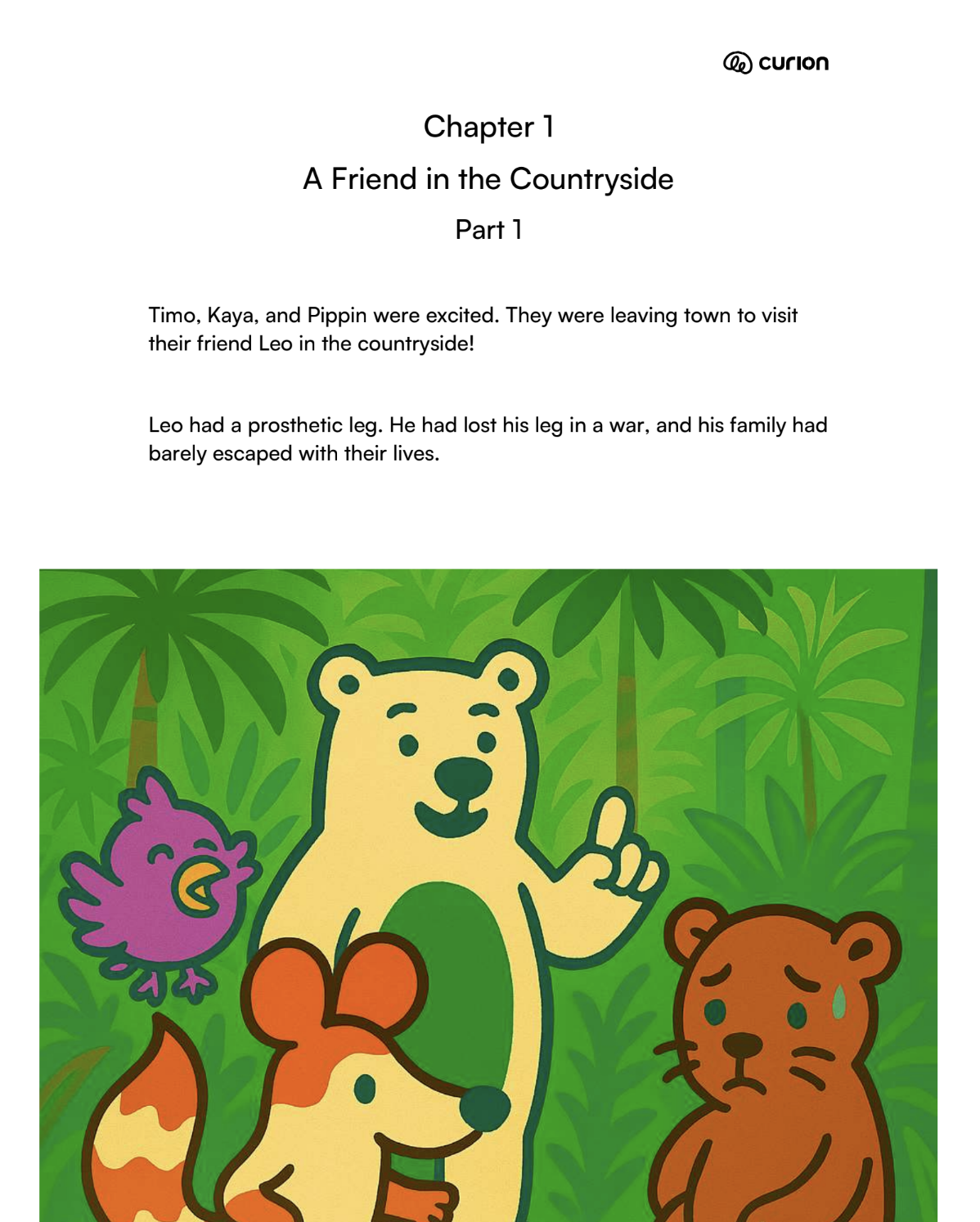
Here’s a sample lesson outline to demonstrate. Every lesson revolves around an original Curion story. Here is one example story:
This is how the story is applied during the lesson:
Students discuss the theme of Countryside vs. The City, practising oral expression.
Shared reading of an original Curion story (“A Friend in the Countryside”), building vocabulary and sparking engagement.
Cloze passage using context clues from the story (Vocabulary and Grammar practise).
Using story details, students compare the Town Mouse and Country Mouse, strengthening inference and descriptive skills.
Conclude the story with shared reading to tie together the lesson’s themes and maintain narrative engagement.
Every Curion lesson blends storytelling, thinking skills, and technical accuracy. Instead of isolated grammar drills, students learn how language works within real contexts.
(e.g., plurals, simple verbs)
(past tense, prepositions, synthesis)
Basic Comprehension
(understanding passages)
(reorganising, rewriting passages)
(MOE-style writing, picture-based writing)
(nouns, places, etc..)
(accurate word choice for description, clarity, and tone)
(reading aloud, oral games)
(stimulus-based conversation, presentations)