
Programme Overview

These problems only become glaring once P1-2 children advance to P3-6, where they are tested on PSLE English exam components. By the time these gaps show up at the upper primary levels, they are much harder to fix.
P2 is the final year in our Curion Explorers programme. Our goal in P2 is to deepen each child’s understanding of the English language, before they are launched into the exam-heavy demands of P3.
Rather than superficial drilling on PSLE components, we focus on strengthening the mental systems that make scoring in exams feel intuitive later on.
Curion Explorers is designed around our Skill Pillars System (see Pedagogy page for more information). Each lesson targets 2-4 specific sub-skills in a systematic and precise manner. To keep lessons fun and engaging, we package every lesson as pieces of an unfolding chapter book.
Here’s a sample lesson outline to demonstrate. Every lesson revolves around an original Curion story. Here is one example story:
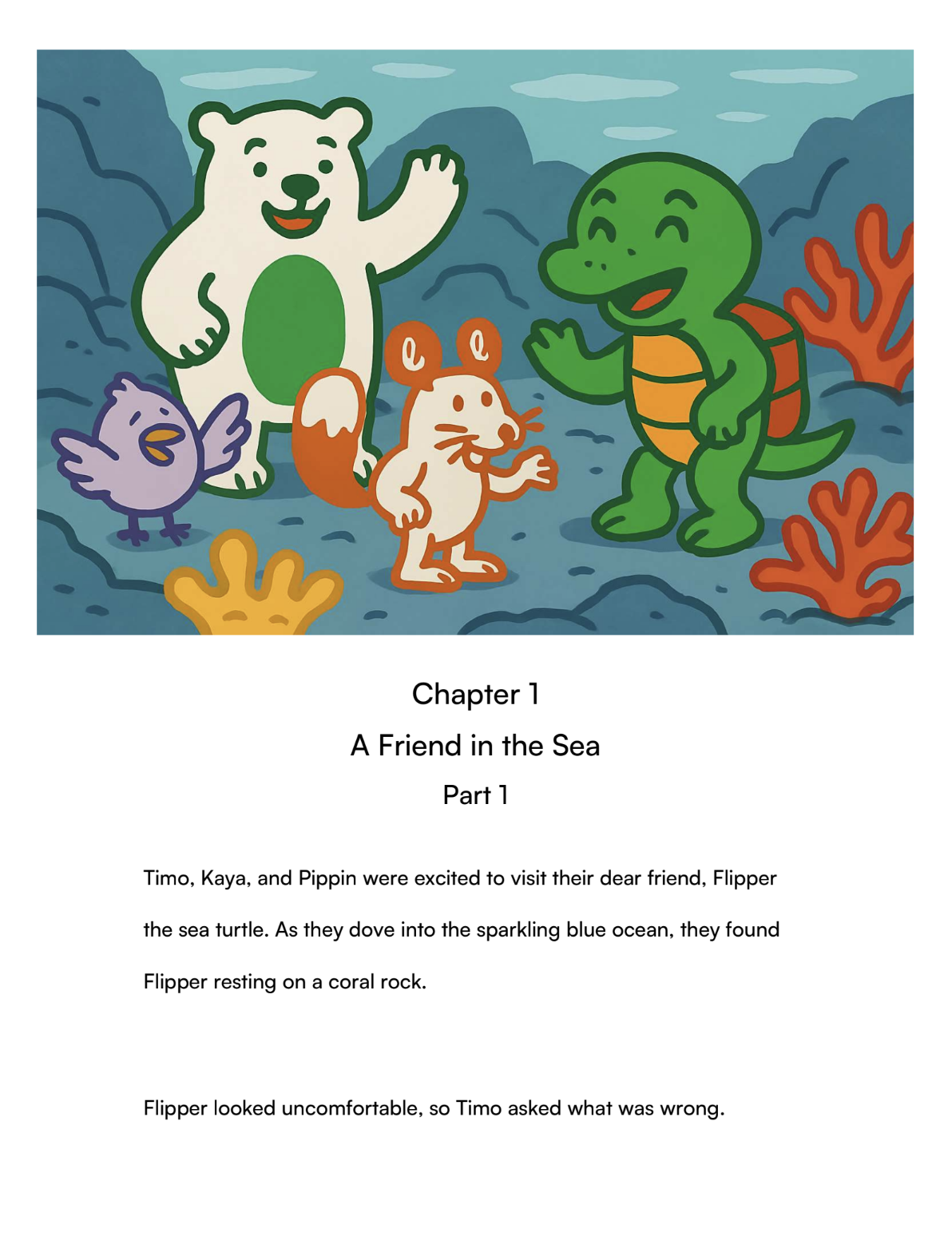
Theme
Ocean Life
Focus Skills
- Comprehension: Holding and using information across multiple details
- Grammar: Synthesis & Transformation (joining sentences, using pronouns)
- Vocabulary in Context: Cloze with rhyme, meaning, and grammar cues
This is how the story is applied during the lesson:
Reading Part 1 of the story (The Secret of the Sea) together, sparking curiosity and introducing context.
Apply vocabulary in a rhyming poem (students learn to use context, rhyme, and grammar as clues)
Reinforce comprehension and vocabulary through a fun clue-based game
Shared reading of Part 2 to wrap up the narrative and reinforce language exposure
Recap key skills and learning points for the day
Every Curion lesson blends storytelling, thinking skills, and technical accuracy. Instead of isolated grammar drills, students learn how language works within real contexts.
(tenses, prepositions, pronouns, synthesis)
(relative pronouns, conjunctions, articles, demonstratives, sentence transformation)
(using connectors, pronouns to avoid repetition)
(editing, synthesis, transformation, paragraph cohesion)
(multi-step inference, comparing details, problem-solving comprehension)
(visual text, comprehension open ended, comprehension cloze, layered inference tasks)
(vocabulary tied to grammar, cloze, sentence accuracy)
(used in spelling, grammar cloze, synthesis, descriptive writing)
(oral sequencing, conversational fluency with structure)
(stimulus-based conversation, formal listening comprehension, reading aloud)